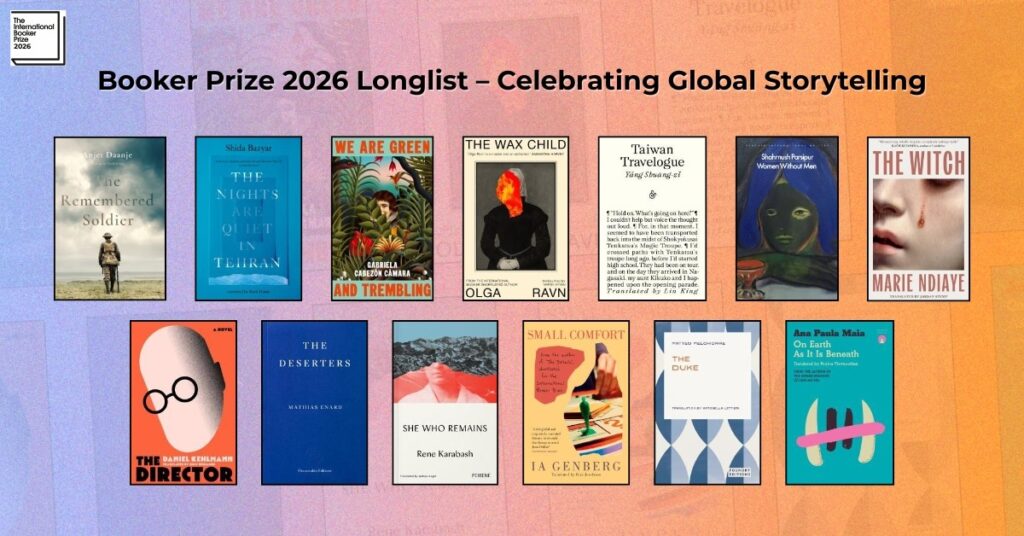
INTERNATIONAL BOOKER PRIZE 2026 WINNER
A queer colonial romance wrapped in matryoshka layers how a Taiwanese novel made literary history on the world’s biggest stage.
Author: Yáng Shuāng-zǐ Translator: Lin King
Announced: 19 May 2026, London Prize: £50,000 (shared equally)
| 1st Mandarin Chinese book to win the prize | 23 Territories with translation rights sold | 11th Winner in the prize’s current form | 65% Sales uplift after shortlist announcement |
THE MOMENT
A Historic Night at the Tate Modern
On the evening of 19 May 2026, in the dramatic Turbine Hall of London’s Tate Modern, Natasha Brown chair of the judging panel announced that the International Booker Prize 2026 had been awarded to Taiwan Travelogue by Yáng Shuāng-zǐ, translated from Mandarin Chinese by Lin King. The room fell quiet, then erupted.
It was a night of firsts. The first Taiwanese author to win. The first Taiwanese American translator to win. And crucially the first book translated from Mandarin Chinese to ever claim the prize in its decade-long history. This was not just a literary prize announcement; it was a seismic shift in world literature’s centre of gravity.
“Taiwan Travelogue pulls off an incredible double feat: it succeeds as both a romance and an incisive postcolonial novel. As judges, we’ve enjoyed rich discussions about the many layers of this book. It’s a captivating, slyly sophisticated novel.”
Natasha Brown, Chair of the 2026 International Booker Prize Judges
THE STORY
Love, Food, and Colonial Taiwan in 1938
The novel is set in May 1938, when Taiwan was under Japanese imperial rule. A young Japanese novelist, Aoyama Chizuko, sails from Nagasaki to Taiwan on a government-sponsored cultural tour. She has zero interest in state banquets or imperial propaganda her obsession is food: real food, the kind found in night markets and humble kitchens.
She is assigned a local interpreter Ô Chizuru, a younger Taiwanese woman who, fascinatingly, shares the characters of her name. Chizuru becomes Chizuko’s guide across the island’s railways, temples, markets, and dining tables. Over scenic train rides and braised pork rice, lively banter and winter melon tea, Chizuko grows infatuated with her companion and intent on drawing her closer. But something causes Chizuru to keep her distance an unknowable quality, a carefully constructed mask of professionalism that she refuses to let slip.
It’s only after a heartbreaking separation that Chizuko begins to grasp what the ‘something’ is. By then, the reader has already understood it and felt it deeply.
The power dynamics are impossible to ignore. Chizuko’s admiration is genuine, but she is still a citizen of the empire occupying Chizuru’s island. Their relationship asks a quietly devastating question: Can love to overcome a power imbalance? The novel doesn’t offer easy answers and that is precisely its genius.
HOW IT BEGINS
The Opening of Taiwan Travelogue
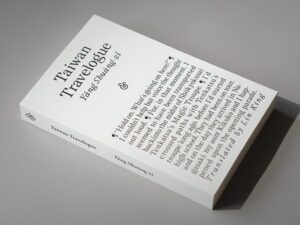
Few novels announce themselves with such assured, disorienting confidence. Here is how Taiwan Travelogue begins:
“Hold on. What’s going on here?”
I couldn’t help but voice the thought out loud.
For, in that moment, I seemed to have been transported back into the midst of Shōkyokusai Tenkatsu’s Magic Troupe.
I’d crossed paths with Tenkatsu’s troupe long ago, before I’d started high school. They had been on tour, and on the day they arrived in Nagasaki, my aunt Kikuko and I happened upon the opening parade.
The procession comprised a majestic formation of rickshaws, rows and rows of them with no end in sight enough to rival an army regiment. The band rode at the frontmost rickshaws, performing with remarkable gusto; after them came the women magicians, beaming and waving at the crowd in exquisite maquillage; they were followed by the male magicians in top hats… My chest thrummed and lifted, as though something had been strung from my navel all the way up into the sky.
And here I was, decades later, on the outpost island of Taiwan, reliving this old reverie. It was May, in the thirteenth year of Shōwa…
The opening does exactly what the whole novel does: it disorients you, draws you in through sensory memory, and suspends you between past and present, Japan and Taiwan, reality and performance. You are already inside the magic troupe before you know it.
THE CRAFT
A Matryoshka Doll of a Novel
What makes Taiwan Travelogue extraordinary isn’t just its story it’s its audacious construction. The novel is presented as the fictional translation of a rediscovered 1930s Japanese travel memoir. When it was first published in Mandarin Chinese in 2020, some readers genuinely believed they were reading a real historical document. That’s the level of Yáng’s meticulous craft.
The book is layered with introductions, afterwords, translator’s footnotes (both fictional and real), and historical clarifications what critics called “a virtuosic performance of literary polyphony.” Lin King’s English translation adds yet another layer, making the whole text a dazzling hall of mirrors about language, power, and whose voice gets preserved.
King worked closely with her editor Yuka Igarashi at Graywolf Press, taking a deliberately maximalist approach breaking countless translation “rules” to produce what she describes as “an experimental, multilayered work.” The result is a translation that feels like its own act of creative defiance, perfectly mirroring the novel’s themes of resistance and concealment.
“Yáng frames the narrative through a fictional author, a fictional translator and their respective silences, making the unreliable narrator not merely a device but a structural argument about whose knowledge counts and whose remains obstructed.”
Eva Cheuk Yin Li, The Conversation
THE THEMES
What the Novel Is Really About
On the surface, Taiwan Travelogue is a delightful culinary journey. Underneath, it is a richly layered meditation on colonial power dynamics, queer love and identity, language and translation, historical memory, and Taiwan’s profoundly ambivalent relationship with its Japanese colonial past.
Yáng has spoken about why she chose this period: “Both Korea and Taiwan were once colonies of the Japanese Empire, but Koreans seem to feel uniformly resentful of that history, whereas Taiwanese people regard it with a much more conflicted mix of distaste and nostalgia. Using a contemporary Taiwanese lens, I wanted to untangle the complex circumstances that Taiwan’s people faced in the past, and to explore what kind of future we ought to strive toward.”
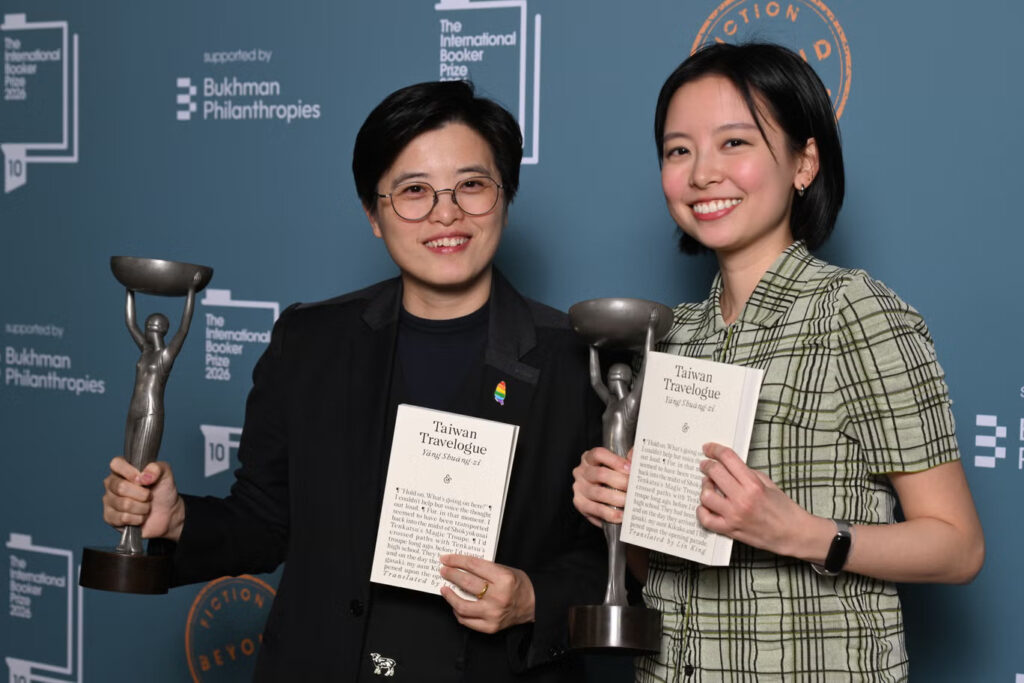
Translator Lin King was equally intentional: “I personally dislike historical fiction that is strictly miserable. These stories ring to me as untrue, because no matter how difficult times are, I believe that humans always manage to find flickers of levity and deep wells of love. Were Taiwan’s peoples oppressed and mistreated under Japanese rule? Yes, but that does not mean their identities and personalities were bulldozed over by their suffering. There was still humour, good food, movies, school, petty fights, and romance. To suggest otherwise is to reduce a culture to its trauma.”
THE PEOPLE BEHIND THE BOOK
Author & Translator
Yáng Shuāng-zǐ is a Taiwanese writer of fiction, essays, manga, video game scripts, and literary criticism. Taiwan Travelogue is her first book translated into English. She began outlining the novel in late 2017, formally started writing on 18 February 2019, and completed the first draft by 20 August of the same year. As she wryly noted of her research into travel and food: “My savings went down; my weight went up.”
Lin King is a Taiwanese-American writer and translator based between Taipei and New York. Her fiction has appeared in One Story, Boston Review, and Joyland. She is a PEN/Dau Short Story Prize recipient, and her debut novel Weeb is forthcoming from Holt. Her translations include the graphic novel series The Boy from Clearwater.
The £50,000 International Booker Prize is split equally between author and translator a formal recognition that translation is not a lesser act, but an act of co-creation.
THE RECOGNITION
A Book Already Crowned with Honours
- International Booker Prize 2026 First Mandarin Chinese book to win; first Taiwanese author and Taiwanese American translator
- US National Book Award for Literature in Translation, 2024 A landmark first for Taiwanese literature
- Golden Tripod Award Taiwan’s highest literary honour, on first publication in Mandarin Chinese, 2020
- Asia Society’s inaugural Baifang Schell Book Prize Recognising the best translated Asian literature for English readers
What the critics say
Six Voices on Taiwan Travelogue
“Layers of commentary serve to make the story’s emotional center more difficult to access, and more fulfilling once you’ve earned it… A straightforward story surrounded by many twisting layers of mystery.” Talya Zax, The Atlantic
“In the end, Taiwan Travelogue is much more than a feast for foodies or a tale for armchair travelers. It’s a journey into the hearts of two unforgettable women who may or may not be able to reconcile friendship, perhaps even love, with the enormous gap in their social status.” Marcie Geffner, Washington Independent Review of Books
“Taiwan Travelogue is a fearless record of a complicated time in Taiwan’s history. It not only captures the physical details of the period of Japanese colonisation but also the difficult social experiences of the people who lived through it.” Lauren Yu-Ting Bo, Words Without Borders
“Taiwan Travelogue does not set out to answer its questions, but rather to reveal them, while paying homage to Taiwan’s ever-growing cultural amalgam.” Nitika Francis, The Hindu
“What makes the book genuinely pleasurable is its treatment of intimacy between the two women. The queer undertow is rendered through the minute economies of shared meals and unfinished sentences, through which Yáng smuggles the most profound questions about desire, friendship and colonial entitlement into the everyday.” Eva Cheuk Yin Li, The Conversation
“As rich and heady as some of the dishes that Chi-chan prepares for Aoyama, Taiwan Travelogue is a multi-layered meditation on language and longing, and on the many ways in which we travel only to arrive where we started.” Ángel Gurría-Quintana, Financial Times
THE BIGGER PICTURE
Why This Win Matters for World Literature
The International Booker Prize celebrated its 10th anniversary this year, and the selection of Taiwan Travelogue felt like a statement of intent for where the prize and world literature is heading. Taiwanese literature has existed in relative obscurity on the global stage for too long. This win blows the door open.
Translation rights have already been sold in 23 territories, from Serbia to Indonesia, Brazil to Ukraine. Indian readers have found particular resonance their own colonial histories reflected in Taiwan’s ambivalent relationship with its Japanese past. This is the power of translated fiction: it creates unexpected bridges of empathy across geography and time.
The win also signals something important about the future of queer historical fiction. Taiwan Travelogue does not bury its characters’ identities under their suffering. It insists on their full humanity their desire, their wit, their love of a perfectly cooked meal and in doing so recovers a history that colonialism and heteronormativity conspired to erase.
FINAL WORD
Should You Read It?
Absolutely and for more reasons than its prize-winner status. Taiwan Travelogue is the rare book that works on every level you bring to it. Read it as a romance and you will ache for its characters. Read it as historical fiction and you will learn a neglected chapter of Asian colonial history. Read it as metafiction and you will marvel at its architectural ingenuity. Read it as a food memoir and you will find yourself hungry by page three.
It is the kind of book that makes you grateful that translation exists that Lin King crossed languages and time periods to bring Yáng Shuāng-zǐ’s vision to a global audience. As Lin King herself has said, reading in translation is the best kind of travel. Taiwan Travelogue proves it.
Taiwan Travelogue In One Line
A bittersweet queer love story set in 1930s colonial Taiwan, wrapped in a labyrinth of footnotes, fictional memoirs, and the quiet, devastating question of whether love can survive power.